Sharm El Sheikh, St. Catherine’s Monastery, Mount Moses, and the Seven Girls Monastery& Cairo & Wadi El Natrun & Harghada Religious program 10 days / 9 nights
Sharm El Sheikh, St. Catherine’s Monastery, Mount Moses, and the Seven Girls Monastery& Cairo & Wadi El Natrun & Harghada Religious program 10 days / 9 nights
Free day, optional trips and enjoyment of the Red Sea beaches
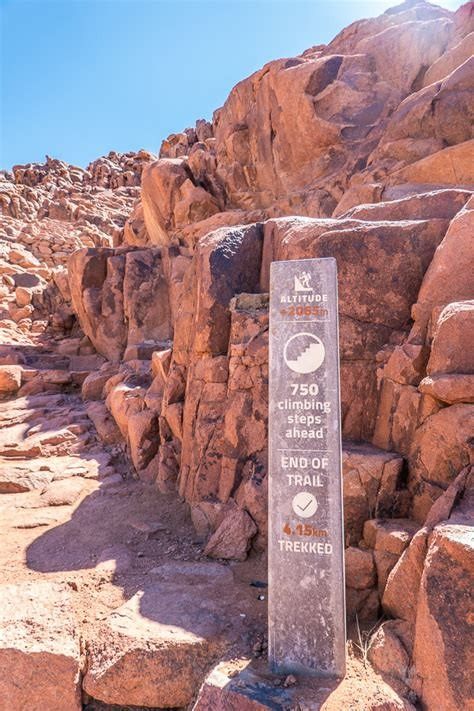
Day 3 (St. Catherine's Monastery, Mount Moses, and the Seven Girls Monastery)
From Sharm to St. Catherine and Mount Moses
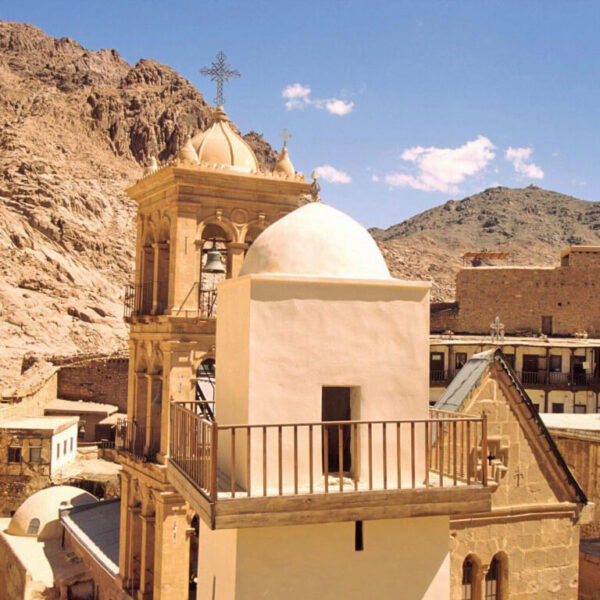
Catherine is the most special and distinctive city in Sinai. It is the highest inhabited place in Sinai, located on a plateau 1600 meters above sea level in the heart of South Sinai, 300 km from the Suez Canal. Its area is 5130 square kilometers, and it is surrounded by a group of mountains that are the highest in Sinai and in all of Egypt, the highest of which are Mount Catherine, Mount Moses, and Mount Safsafa. This height has given it a distinct climate that is moderate in the summer and very cold in the winter, which gives it a special beauty when snow covers the mountain peaks and the land of the city. The area has been declared a nature reserve due to its natural, historical, and religious importance. Most of the city’s residents work in agriculture, herding, and tourism services. The city is famous for religious tourism, safari tourism, and mountain climbing. It contains St. Catherine’s Monastery, Mount Moses, the shrine of the Prophet Aaron, and other religious monuments. It is considered the largest nature reserve in the Arab Republic of Egypt in terms of area. The city is named after Saint Catherine (Saint Catherine), who was born in Alexandria at the end of the third century AD. She was described as wise, intelligent and modest. She was raised on the love of Jesus Christ, attended school, and was educated in the sciences of the Holy Bible. When she was eighteen, she completed her studies in theology and philosophy and was baptized. In 307 AD, Emperor Maximianus came to Alexandria, ordered the worship of idols, persecuted the saint, and tortured her until he ordered her beheaded-on November 25, 307 AD. Five centuries after her martyrdom, a monk in Sinai saw a group of angels carrying her body and flying with it and placing it on the top of a mountain in Sinai. The monk set off to the top of the mountain and found the body as he had seen it in the vision. He carried it to the Church of the Prophet Moses, and then the body was transferred to the Church of the Transfiguration in the monastery built by Emperor Justinian in the sixth century AD. The monastery was known as the Monastery of Saint Catherine, and the name was given to the entire city. It is the mountain on which the Ten Commandments were given to Moses by God, according to the Book of Deuteronomy in the Hebrew Bible. It is described in two places (in Exodus and Kings) as “the mountain of God.” The mountain is also called Mount Yahweh.
In other biblical passages, these events are described as having taken place at Mount Sinai. Although most scholars consider Sinai and Horeb to be different names for the same place, there is a minority opinion that they may have been different places.
Lunch at a local restaurant
The Protestant reformer John Calvin saw Sinai and Horeb as the same mountain, with the eastern side of the mountain called Sinai and the western side called Horeb. Abraham ibn Ezra suggested that there was only one mountain, “with only two peaks, bearing these different names.”
“The monastery of the girls” The valley was a refuge for the first Christian hermits in Sinai.
The monastery was called “the monastery of the girls” because it was inhabited by nuns. It happened that the monastery and its nuns were attacked by the Berbers who attacked the nuns, who were seven in number. They threw themselves from the outer walls to the bottom of the steep mountain on which the monastery was built. Therefore, this monastery was called “the monastery of the seven girls”.
The monastery was built in Wadi Feiran in the fourth century AD and is considered the first and greatest Christian center in the peninsula. It was the center of the bishops of Sinai. At the same time, St. Catherine’s Monastery was built to be a residence for the nuns.
Return to the hotel. Overnight stay in Sharm
Day 4 (Departure to Cairo)
Check out from hotel
Transfer to Sharm airport fly to Cairo
Arrival at Cairo Airport
transfer to the hotel.
Check-in and overnight at the hotel.
Day 5(Coptic & Old Cairo &Religious Complex)
After breakfast, Visit the religious complex, which includes the Hanging Church, the Church of Mar Girgis and Barbar, the Ben Ezer Jewish Temple, and the Mosque of Amr ibn al-Aas, which is the first mosque built in the history of Islamic Egypt.
Then visit the Monastery of Simeon, which is an Egyptian Coptic church carved into the Mokate Mountain in Cairo, and includes six Orthodox churches: (the Church of Anba Shenouda, the Church of Anba Bram bin Zara Syriac, the Church of the Angel, Mary and Hanna, the Church of Anba Paula and Anba Antonios, the Church of Mary Mark, the Cathedral of the Virgin and Saint Simeon, which is the largest church in Egypt
Lunch at a local restaurant
then the Holy Tree of Mary, which is the original tree of the Virgin Mary, where the Holy Family rested,
Return to the Cairo hotel Overnight
Day 6 (Wadi El Natrun)
Transfer from hotel to visit Wadi El Natrun
It gained a sanctifying character in Christianity due to the passage of the Holy Family through it. The area was known by several names, the most famous of which is
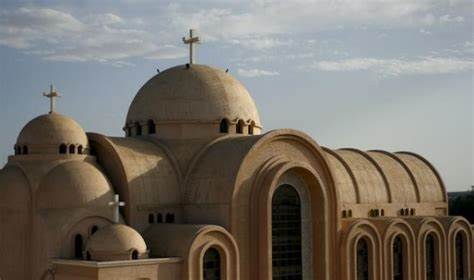
The first Christian monastic gathering in Wadi El Natrun dates back to the fourth century AD by Makar the Great, who established the Monastery of Anba Makar, which is still inhabited, along with three other monasteries: the Monastery of Anba Bishoy, the Monastery of Bigamous, and the Monastery of the Syrians. The area contained about 700 monasteries in the second half of the fourth century AD. Therefore, the area is considered one of the most important honored areas for followers of the Coptic Orthodox Church.
As for the historical tourism aspect, it has a religious character, and this is represented by the four Coptic Orthodox Christian monasteries in it; They are: Monastery of Anba Makar, Monastery of Anba Bishoy, Monastery of Bigamous and Monastery of the Syrians
Monastery of Anba Makar: This monastery is attributed to Anba Makar the Great, a disciple of Anba Anthony the Great, the founder of Christian monasticism. Accordingly, Macarius the Great became a monk and secluded himself in the desert of Wadi El Natrun
Monastery of Anba Bishoy: It is the largest of the four monasteries, and this monastery is attributed to Anba Bishoy, who was a disciple of Anba Makar the Great, and he established it under the leadership of a group of monks in the late fourth century AD
Monastery of the Virgin – the Syrians: It is the smallest monastery in the Wadi El Natrun area at all; it was founded by Syrian monks in the sixth century AD. The monastery contains four churches, a fortress and a guest palace in addition to the monks’ cells and the table like the rest of the monasteries in the area. The monastery is famous for the presence of the original cell in which Anba Bishoy secluded himself
Monastery of the Virgin – Bigamous: This monastery is attributed to the Virgin Mary and Maximus and Domitius the Romans; The meaning of the word “Barams” is “of the Romans”. It was founded in the sixth century AD.
Return to the Cairo hotel Overnight
Day 7 (visit the Monastery of Anba Paula & the Monastery of Anba Antonios & Hurghada)
Check out from Cairo hotel
transfer to visit the Monastery of Anba Paula & the Monastery of Anba Antonios
The Monastery of Anba Paula is one of the oldest Egyptian monasteries. It was established in the late fourth century AD and the beginning of the fifth century AD.
The Copts say that the Hebrews crossed through it with the Prophet Moses to the Red Sea when they left the land of Egypt.
The Monastery of Anba Anthony is the first monastery established in the world and its name is attributed to Anba Anthony, whom the Egyptian Copts consider the first monk in the world and the father of all monks. The current head of the monastery is Anba Yustus
Then transfer to Hurghada
check in
overnight at the hotel.
Day 8 (Hurghada)
Free day, optional trips and enjoyment of the Red Sea beaches
Day 9 (Hurghada)
Free day, optional trips and enjoyment of the Red Sea beaches
Day 10 (Departure Day)
Check-out from the hotel
transfer to hurghada airport for departure
Package Inclusions
Accommodation for 3 nights in Sharm EL Sheikh, including daily All inclusive
Accommodation for 3 nights in Cairo, including daily breakfast
Accommodation for 3 nights in Hurghada, including daily All inclusive
Tour guide
Meet and assist service by our representatives upon your airport arrival
Assistance with guest relations during your stay
All transfers via private air-conditioned vehicle
Entrance fees to all sites mentioned on the itinerary
All service charges and taxes
Package Exclusions
International flight
Domestic flight
Visa
Tiping
Personal expenses
Optional trips
Trips not mentioned in the program
Price
Per person in single room 1900 $
Per person in double room 1177 $
Per person in triple room 999 $
Hotel
Tamra Beach Resort Sharm el-Sheikh or similar
Triumph Plaza Hotel Cairo or similar
Seagull beach resort Hurghada or similar
Description
Day 1:( Arrive Sharm El Sheikh)
Arrive at Sharm El Sheikh International Airport
transfer to the hotel
check in & overnight
Day 2: (Free day)
Free day, optional trips and enjoyment of the Red Sea beaches
Day 3 (St. Catherine's Monastery, Mount Moses, and the Seven Girls Monastery)
From Sharm to St. Catherine and Mount Moses
Catherine is the most special and distinctive city in Sinai. It is the highest inhabited place in Sinai, located on a plateau 1600 meters above sea level in the heart of South Sinai, 300 km from the Suez Canal. Its area is 5130 square kilometers, and it is surrounded by a group of mountains that are the highest in Sinai and in all of Egypt, the highest of which are Mount Catherine, Mount Moses, and Mount Safsafa. This height has given it a distinct climate that is moderate in the summer and very cold in the winter, which gives it a special beauty when snow covers the mountain peaks and the land of the city. The area has been declared a nature reserve due to its natural, historical, and religious importance. Most of the city’s residents work in agriculture, herding, and tourism services. The city is famous for religious tourism, safari tourism, and mountain climbing. It contains St. Catherine’s Monastery, Mount Moses, the shrine of the Prophet Aaron, and other religious monuments. It is considered the largest nature reserve in the Arab Republic of Egypt in terms of area. The city is named after Saint Catherine (Saint Catherine), who was born in Alexandria at the end of the third century AD. She was described as wise, intelligent and modest. She was raised on the love of Jesus Christ, attended school, and was educated in the sciences of the Holy Bible. When she was eighteen, she completed her studies in theology and philosophy and was baptized. In 307 AD, Emperor Maximianus came to Alexandria, ordered the worship of idols, persecuted the saint, and tortured her until he ordered her beheaded-on November 25, 307 AD. Five centuries after her martyrdom, a monk in Sinai saw a group of angels carrying her body and flying with it and placing it on the top of a mountain in Sinai. The monk set off to the top of the mountain and found the body as he had seen it in the vision. He carried it to the Church of the Prophet Moses, and then the body was transferred to the Church of the Transfiguration in the monastery built by Emperor Justinian in the sixth century AD. The monastery was known as the Monastery of Saint Catherine, and the name was given to the entire city. It is the mountain on which the Ten Commandments were given to Moses by God, according to the Book of Deuteronomy in the Hebrew Bible. It is described in two places (in Exodus and Kings) as “the mountain of God.” The mountain is also called Mount Yahweh.
In other biblical passages, these events are described as having taken place at Mount Sinai. Although most scholars consider Sinai and Horeb to be different names for the same place, there is a minority opinion that they may have been different places.
Lunch at a local restaurant
The Protestant reformer John Calvin saw Sinai and Horeb as the same mountain, with the eastern side of the mountain called Sinai and the western side called Horeb. Abraham ibn Ezra suggested that there was only one mountain, “with only two peaks, bearing these different names.”
“The monastery of the girls” The valley was a refuge for the first Christian hermits in Sinai.
The monastery was called “the monastery of the girls” because it was inhabited by nuns. It happened that the monastery and its nuns were attacked by the Berbers who attacked the nuns, who were seven in number. They threw themselves from the outer walls to the bottom of the steep mountain on which the monastery was built. Therefore, this monastery was called “the monastery of the seven girls”.
The monastery was built in Wadi Feiran in the fourth century AD and is considered the first and greatest Christian center in the peninsula. It was the center of the bishops of Sinai. At the same time, St. Catherine’s Monastery was built to be a residence for the nuns.
Return to the hotel. Overnight stay in Sharm
Day 4 (Departure to Cairo)
Check out from hotel
Transfer to Sharm airport fly to Cairo
Arrival at Cairo Airport
transfer to the hotel.
Check-in and overnight at the hotel.
Day 5(Coptic & Old Cairo &Religious Complex)
After breakfast, Visit the religious complex, which includes the Hanging Church, the Church of Mar Girgis and Barbar, the Ben Ezer Jewish Temple, and the Mosque of Amr ibn al-Aas, which is the first mosque built in the history of Islamic Egypt.
Then visit the Monastery of Simeon, which is an Egyptian Coptic church carved into the Mokate Mountain in Cairo, and includes six Orthodox churches: (the Church of Anba Shenouda, the Church of Anba Bram bin Zara Syriac, the Church of the Angel, Mary and Hanna, the Church of Anba Paula and Anba Antonios, the Church of Mary Mark, the Cathedral of the Virgin and Saint Simeon, which is the largest church in Egypt
Lunch at a local restaurant
then the Holy Tree of Mary, which is the original tree of the Virgin Mary, where the Holy Family rested,
Return to the Cairo hotel Overnight
Day 6 (Wadi El Natrun)
Transfer from hotel to visit Wadi El Natrun
It gained a sanctifying character in Christianity due to the passage of the Holy Family through it. The area was known by several names, the most famous of which is
The first Christian monastic gathering in Wadi El Natrun dates back to the fourth century AD by Makar the Great, who established the Monastery of Anba Makar, which is still inhabited, along with three other monasteries: the Monastery of Anba Bishoy, the Monastery of Bigamous, and the Monastery of the Syrians. The area contained about 700 monasteries in the second half of the fourth century AD. Therefore, the area is considered one of the most important honored areas for followers of the Coptic Orthodox Church.
As for the historical tourism aspect, it has a religious character, and this is represented by the four Coptic Orthodox Christian monasteries in it; They are: Monastery of Anba Makar, Monastery of Anba Bishoy, Monastery of Bigamous and Monastery of the Syrians
Monastery of Anba Makar: This monastery is attributed to Anba Makar the Great, a disciple of Anba Anthony the Great, the founder of Christian monasticism. Accordingly, Macarius the Great became a monk and secluded himself in the desert of Wadi El Natrun
Monastery of Anba Bishoy: It is the largest of the four monasteries, and this monastery is attributed to Anba Bishoy, who was a disciple of Anba Makar the Great, and he established it under the leadership of a group of monks in the late fourth century AD
Monastery of the Virgin – the Syrians: It is the smallest monastery in the Wadi El Natrun area at all; it was founded by Syrian monks in the sixth century AD. The monastery contains four churches, a fortress and a guest palace in addition to the monks’ cells and the table like the rest of the monasteries in the area. The monastery is famous for the presence of the original cell in which Anba Bishoy secluded himself
Monastery of the Virgin – Bigamous: This monastery is attributed to the Virgin Mary and Maximus and Domitius the Romans; The meaning of the word “Barams” is “of the Romans”. It was founded in the sixth century AD.
Return to the Cairo hotel Overnight
Day 7 (visit the Monastery of Anba Paula & the Monastery of Anba Antonios & Hurghada)
Check out from Cairo hotel
transfer to visit the Monastery of Anba Paula & the Monastery of Anba Antonios
The Monastery of Anba Paula is one of the oldest Egyptian monasteries. It was established in the late fourth century AD and the beginning of the fifth century AD.
The Copts say that the Hebrews crossed through it with the Prophet Moses to the Red Sea when they left the land of Egypt.
The Monastery of Anba Anthony is the first monastery established in the world and its name is attributed to Anba Anthony, whom the Egyptian Copts consider the first monk in the world and the father of all monks. The current head of the monastery is Anba Yustus
Then transfer to Hurghada
check in
overnight at the hotel.
Day 8 (Hurghada)
Free day, optional trips and enjoyment of the Red Sea beaches
Day 9 (Hurghada)
Free day, optional trips and enjoyment of the Red Sea beaches
Day 10 (Departure Day)
Check-out from the hotel
transfer to hurghada airport for departure
Package Inclusions
Accommodation for 3 nights in Sharm EL Sheikh, including daily All inclusive
Accommodation for 3 nights in Cairo, including daily breakfast
Accommodation for 3 nights in Hurghada, including daily All inclusive
Tour guide
Meet and assist service by our representatives upon your airport arrival
Assistance with guest relations during your stay
All transfers via private air-conditioned vehicle
Entrance fees to all sites mentioned on the itinerary